

Olive Bouface
A Versatile Streamer for Trout and Smallmouth
The Olive Bouface (Barr) is a staple streamer for a reason: it flat-out catches fish. While it’s a favorite for enticing trout in moving water, this pattern works equally well for smallmouth bass in warmer conditions. Its movement in the water is irresistible, and it’s a relatively simple tie for anglers of all skill levels.
Tip: Tie this in various colors to match your local baitfish. While Olive is a top producer, Black and Tan/Natural are highly effective variations.
Materials Needed
Hook: Streamer hook (size 8-12), Tiemco 200R or similar
Bead: Brass bead, sized to match hook
Thread: 6/0 classic waxed thread (Olive)
Tail/Body: Pine squirrel zonker strip (Olive)
Flash: Pearl Flashabou
Wing: Marabou feathers (Olive)
Collar: Pine squirrel fur (dubbed)
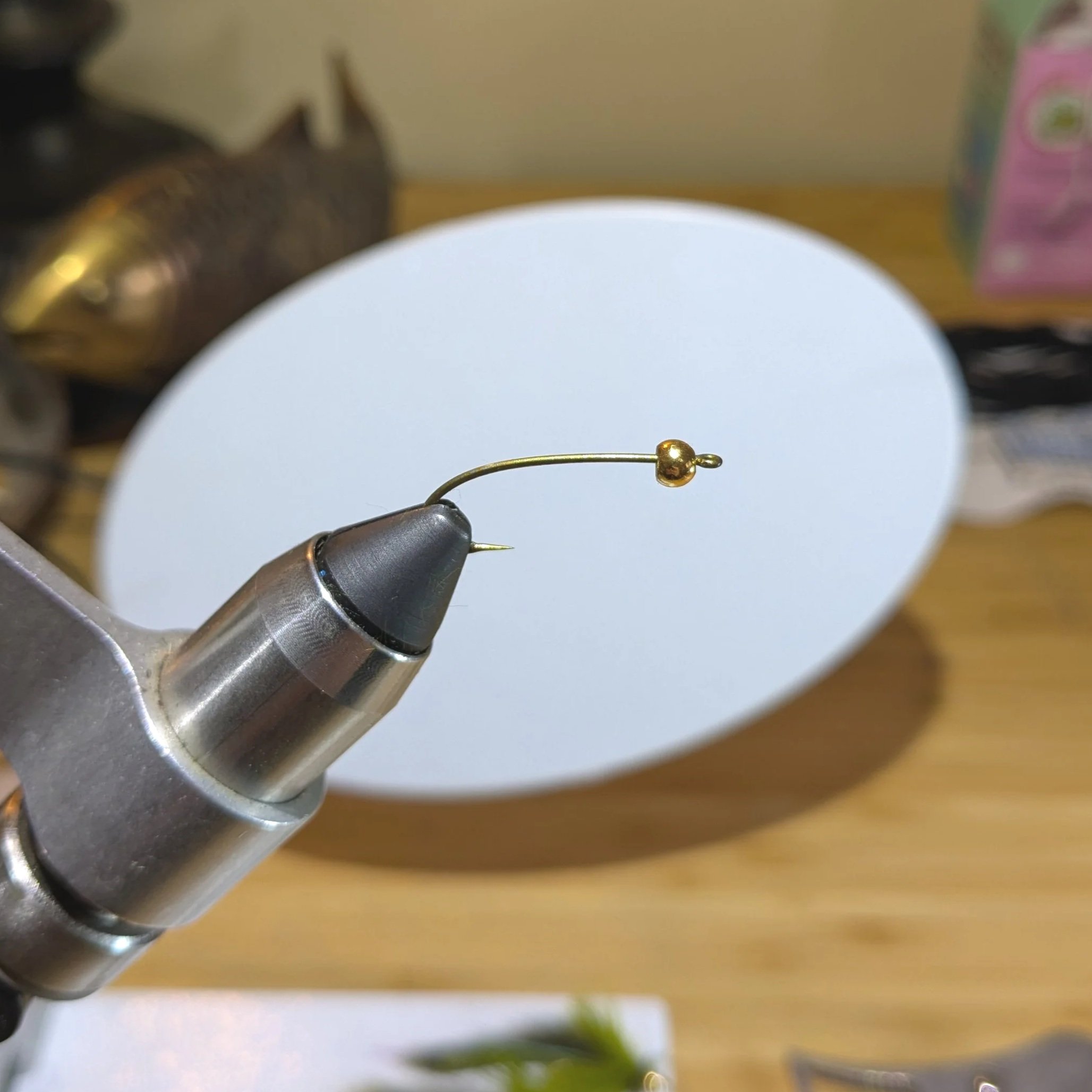
Secure the hook and bead
Slide the brass bead onto the hook and secure the hook firmly in your vise.
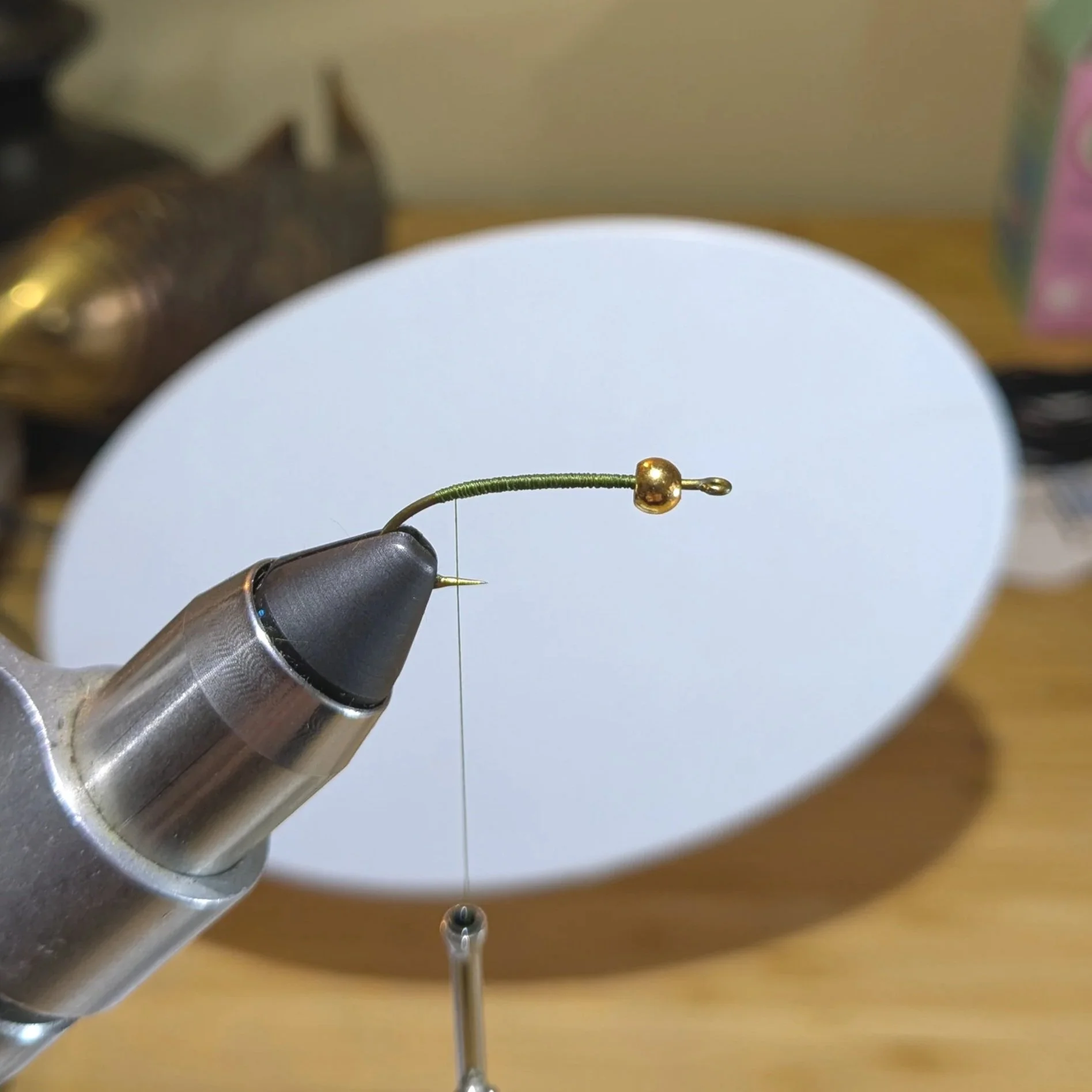
Create the thread base
Wrap your thread from behind the bead to just past the bend of the hook. This provides an even base for your materials. Once finished, return the thread to the bend, stopping just past the hook point.
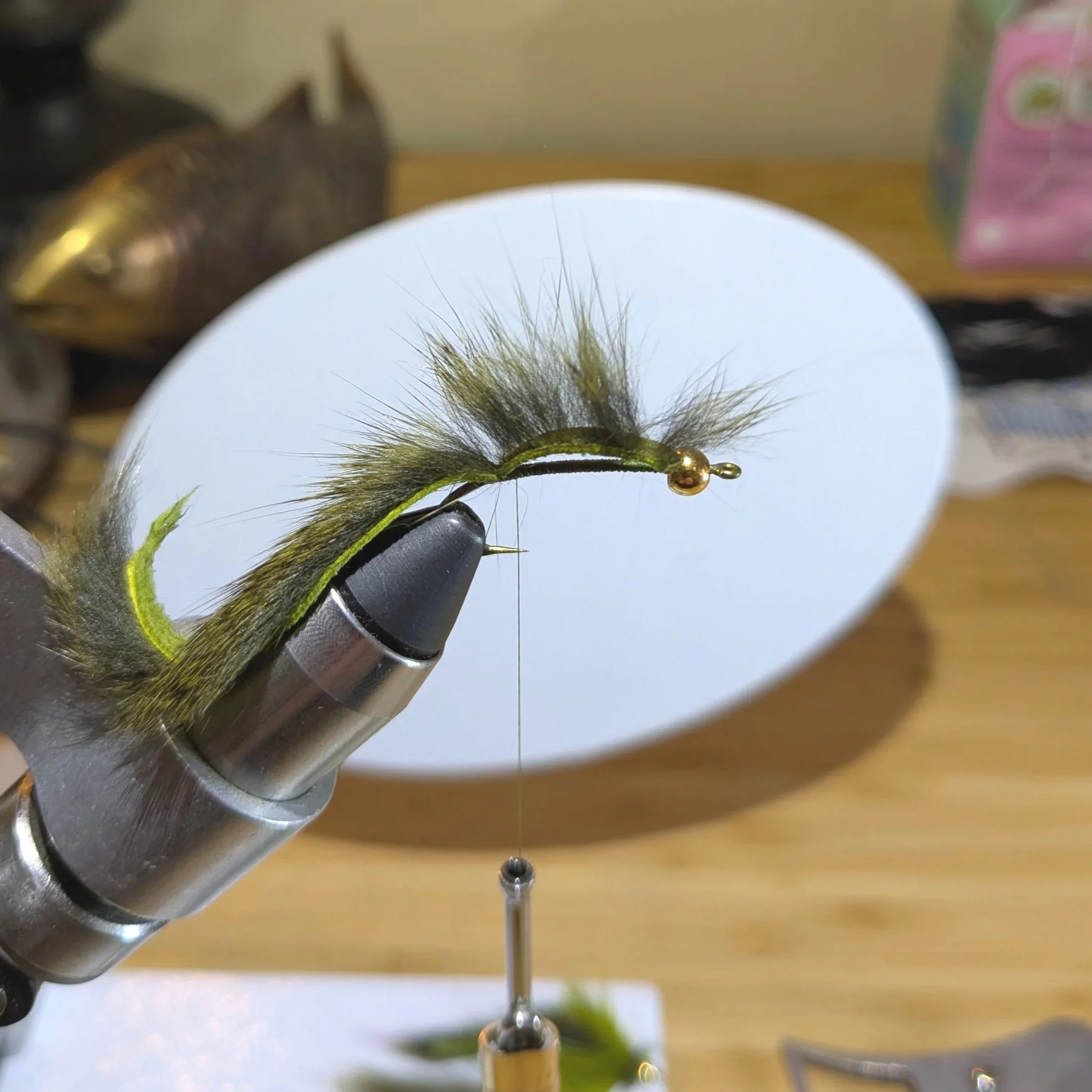
Anchor the zonker strip
Take your pine squirrel zonker strip and place the front edge behind the bead, measuring the tie-in point just beyond the hook bend. Split the hair at the tie-in point with your bodkin or fingers. Secure the zonker strip at the tie-in point with two or three thread wraps, then move the thread forward under the zonker strip.
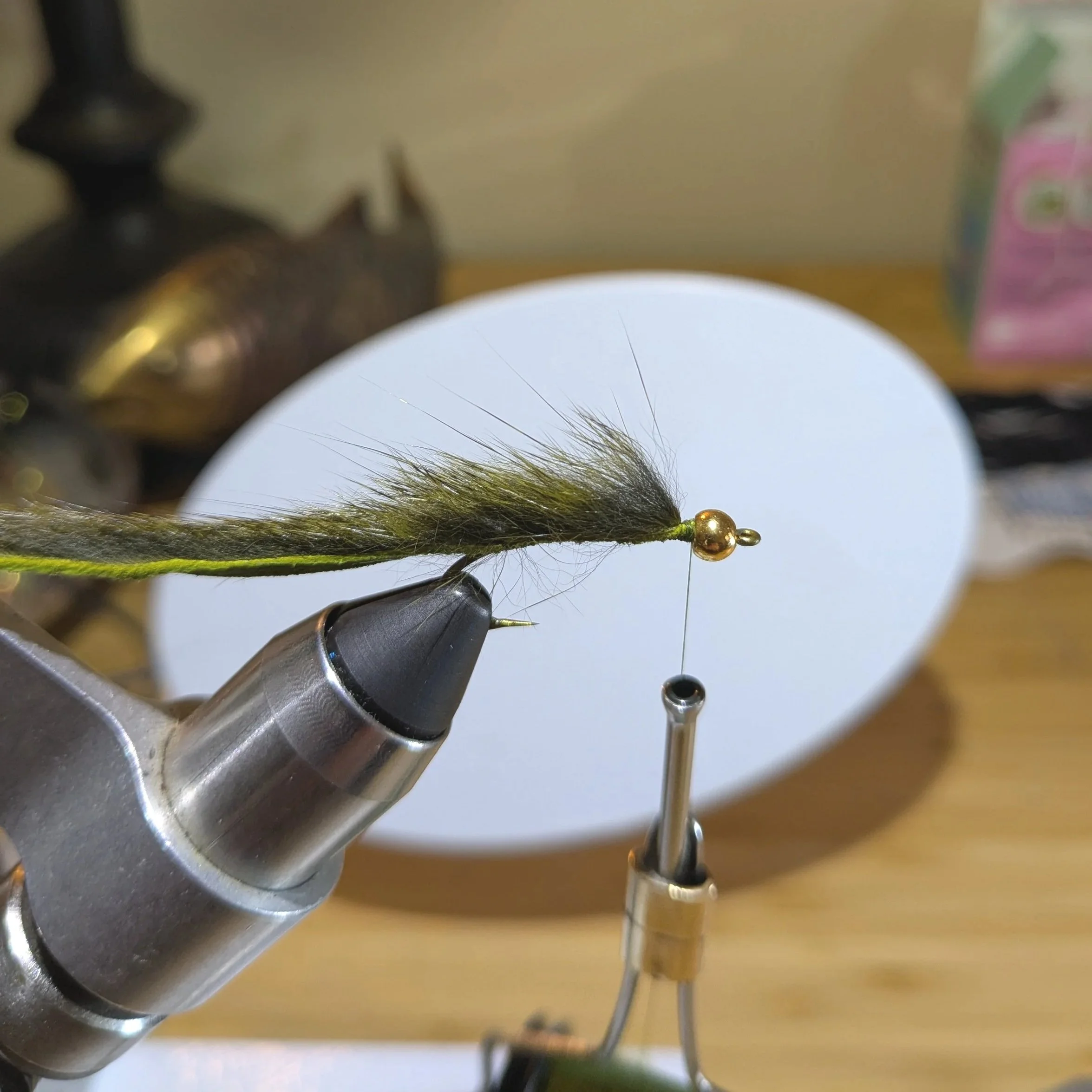
Secure the front
Pull the zonker strip forward and tie it down firmly just behind the bead. Trim any excess hide and make a few additional wraps to smooth out the tie-in point.
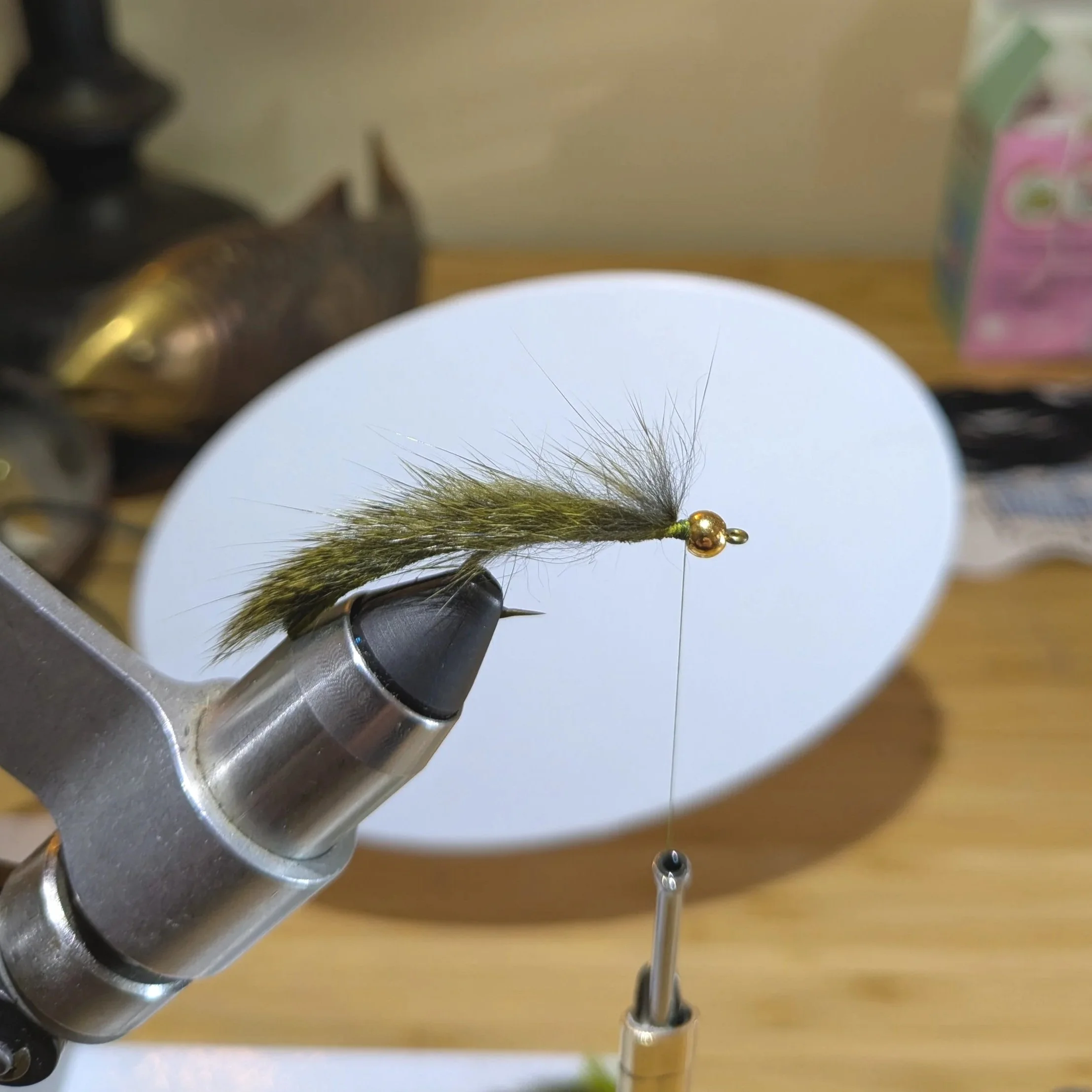
Shape the tail
Trim the tail end of the zonker strip to roughly 1 to 1.5 times the length of the hook shank. Work your scissors under the fur before cutting. By cutting only the hide, you leave a natural, tapered tail of fur.
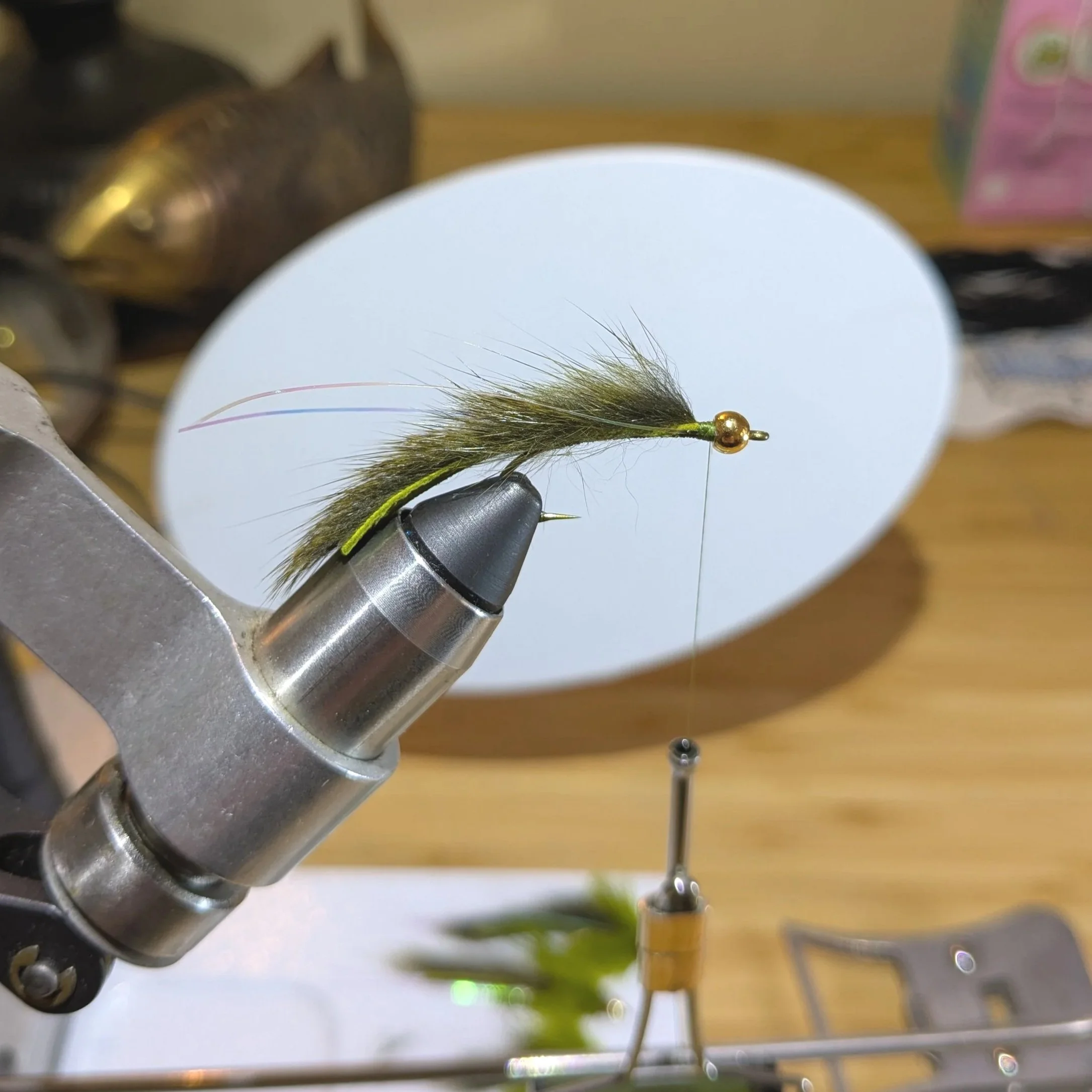
Add a touch of flash
Tie in one strand of pearl Flashabou on each side of the hook. If the material has a slight curve, orient it so the flash curves inward toward the hook for a cleaner profile.
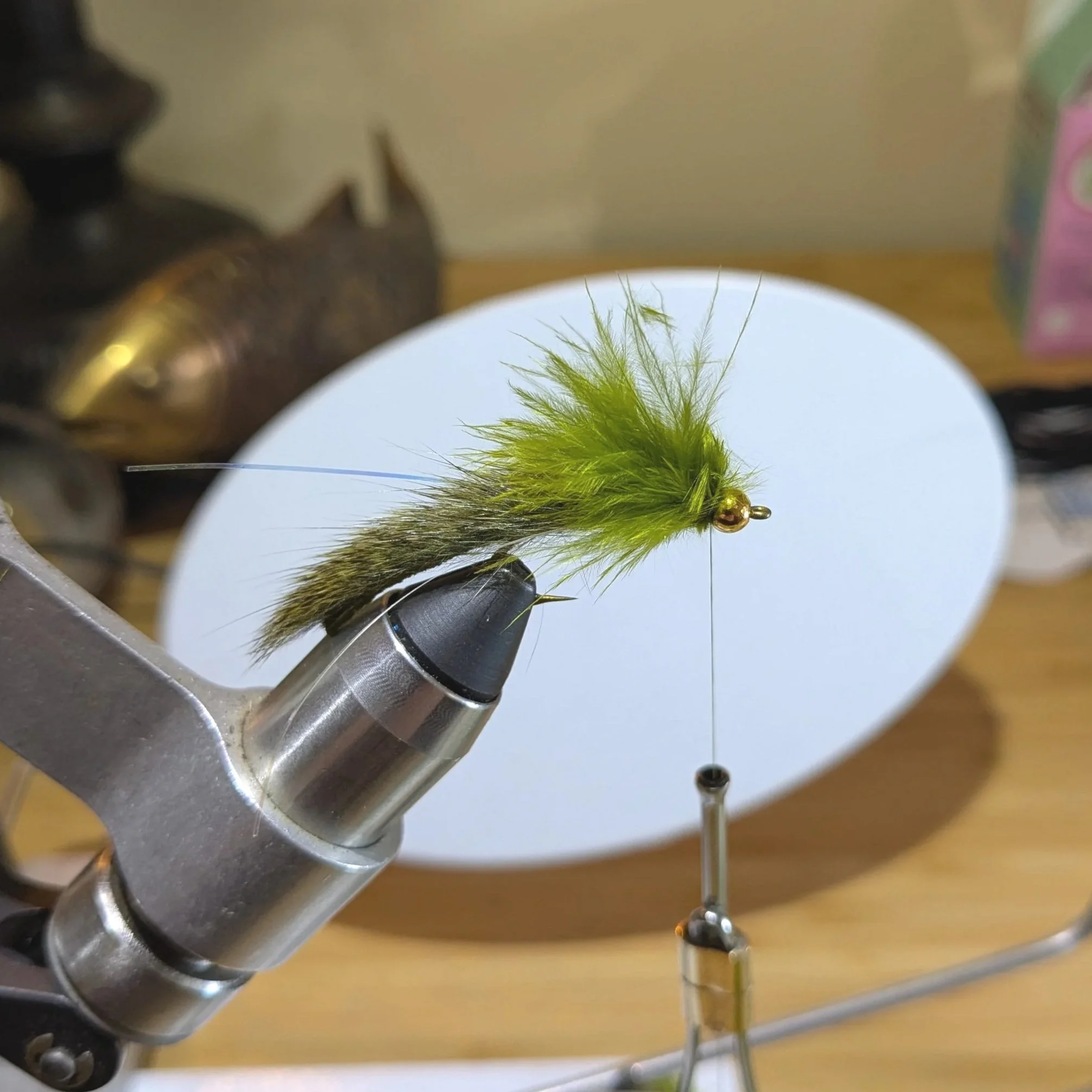
Build the marabou wing
Select an olive marabou feather. Tie it in on top of the hook so the tips extend about the length of one hook shank.
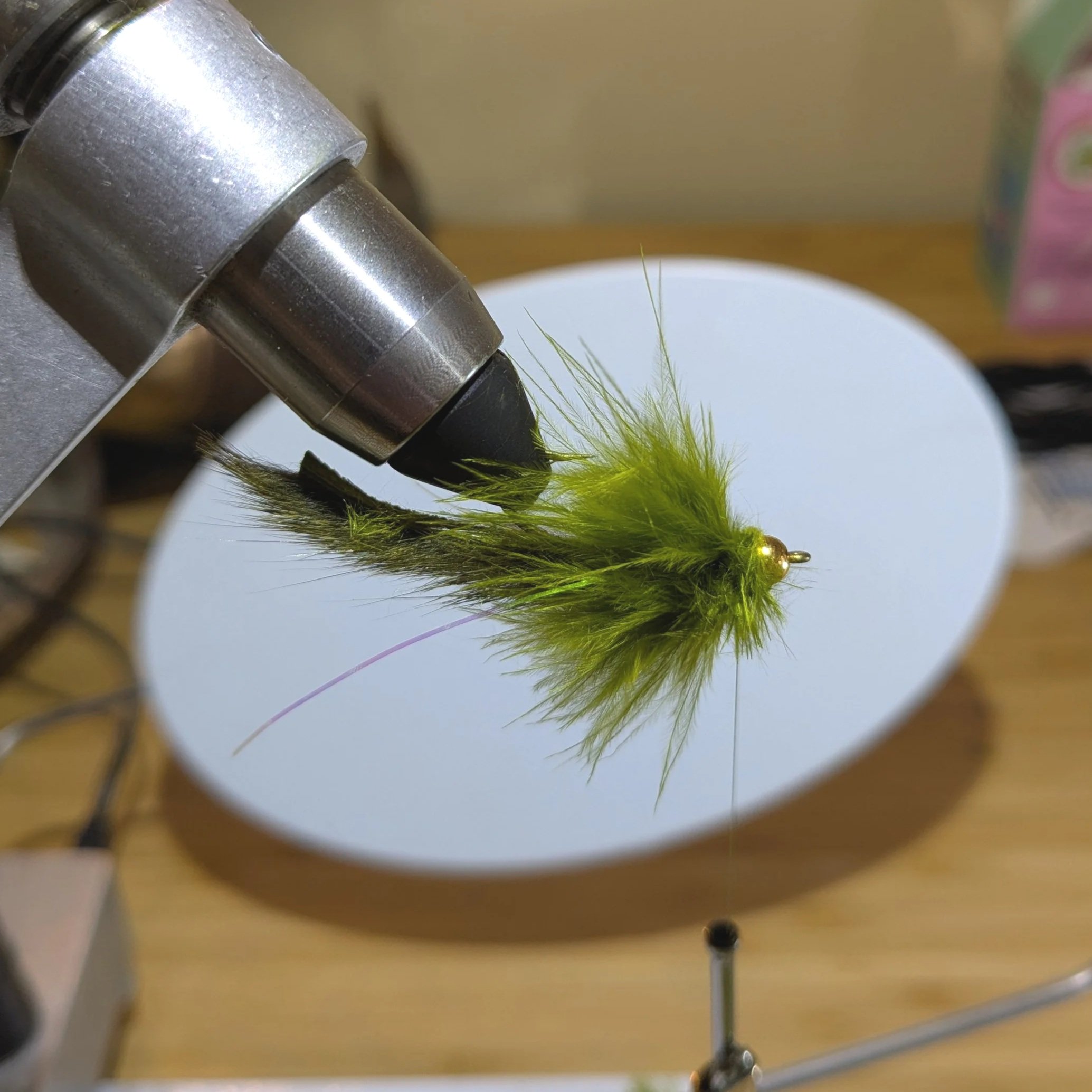
Balance the underside
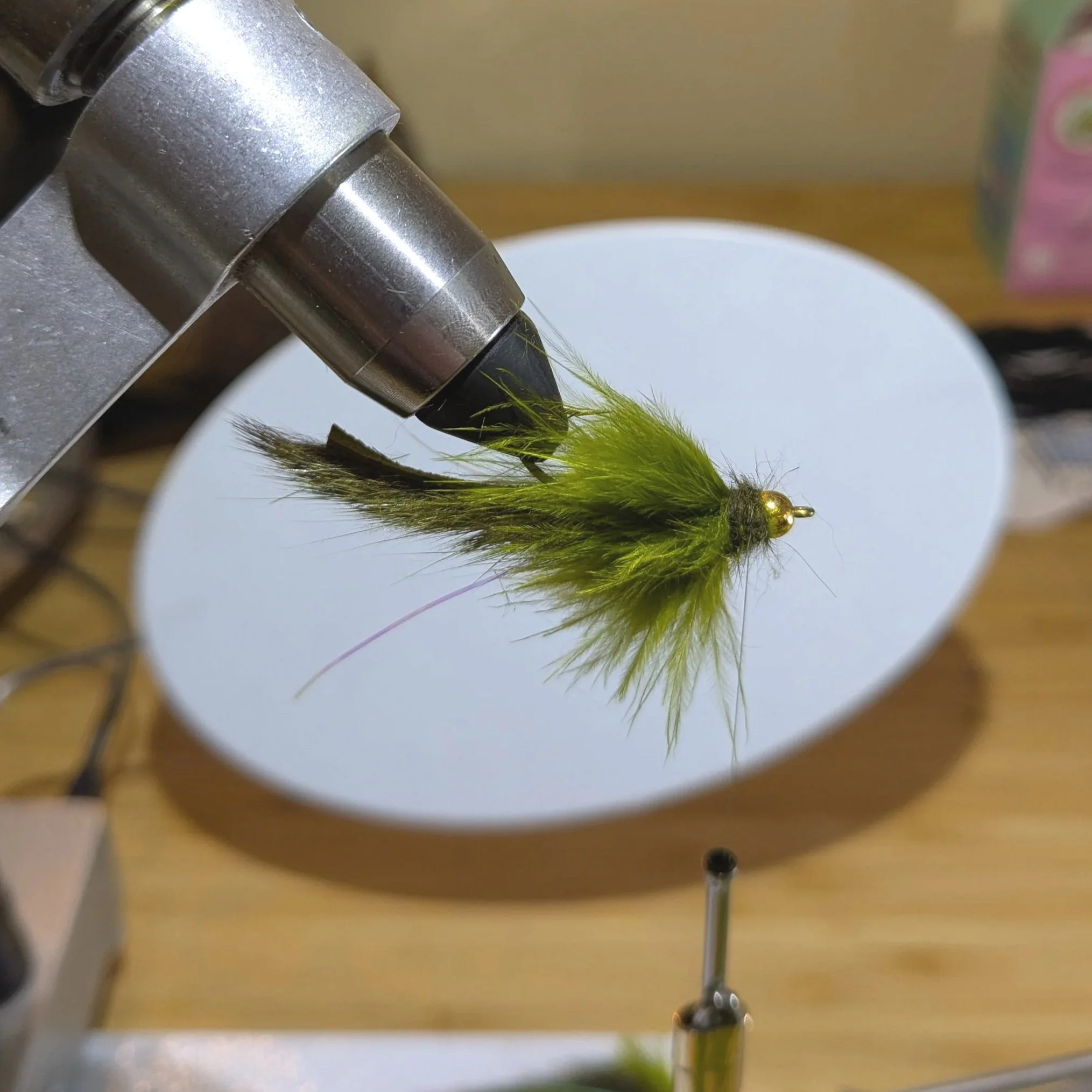
Invert the fly in your vise. Tie in an equal amount of marabou on the bottom of the hook to create a full, 360-degree profile.
Create the dubbing collar
Trim a small amount of fur directly off the pine squirrel hide. Form a dubbing rope on your thread and wrap it around the marabou tie-in point, building a neat collar directly behind the bead.
Finish the fly
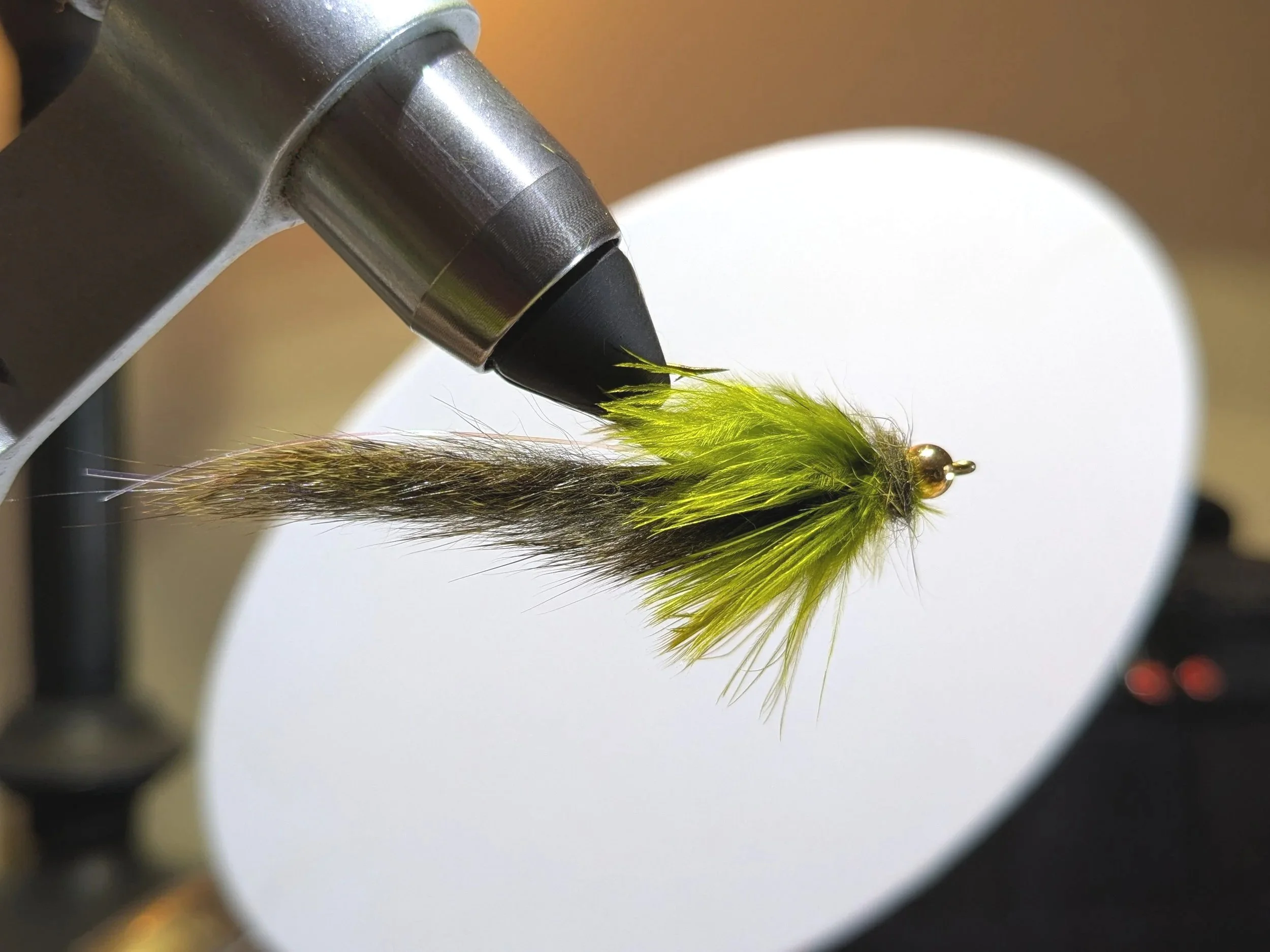
Whip finish behind the bead and apply a drop of thin head cement for durability.
Tips for Fishing the Bouface
The magic of the Bouface lies in its movement. Because it utilizes pine squirrel and marabou, the fly "breathes" even when it isn't moving fast. Here are the three great ways to fish it:
The "Active" Strip: Use short, erratic strips to mimic a panicked baitfish. This is particularly effective for aggressive smallmouth or trout in pocket water.
The Jigging Motion: In deeper pools, use your rod tip to give the fly a vertical jigging action. The brass bead helps the fly dive and dart, triggering a predatory response.
The Slow Swing: Cast across the current and let the fly swing, mending line to slow the drift as needed. This allows the materials to undulate naturally with the flow of the water.
Tip: Don’t give up on the cast too early! Trout frequently trail this fly and strike right at the moment the swing finishes. Always pause for a few seconds at the end of the swing and give it two or three short strips before recasting.
